Close

Search SkiButternut

Snowmaking

Fall 2012 - MORE SNOW FASTER

MORE WATER = MORE SNOW. So over the summer of 2012 the mountain operations team at Ski Butternut enhanced our snowmaking ability YET AGAIN with the installation of two more water pumps. Our fairly new pump house is now built up to full capacity. The two new pumps include a High Pressure 600 GPM pump and a Low Pressure 900 GPM pump. In addition we updated a few of the older snowmaking lines on Cruiser and Hob Nob with miles of larger 12" & 8" Snowmaking Pipe. End Result we can now pump more water which means we can make more snow faster.

 Summer 2011 - More water = more snow.
So over the summer of 2011 the mountain operations team at Ski Butternut enhanced our snowmaking ability yet again. This time by installing a few more miles of larger 12" & 8" Snowmaking Pipe. This steel pipe replaces the air and water lines that have been in the ground for 30 years on Cruiser, Crosstown and Downspout. So we can now pump more water and make more snow faster on these trails.

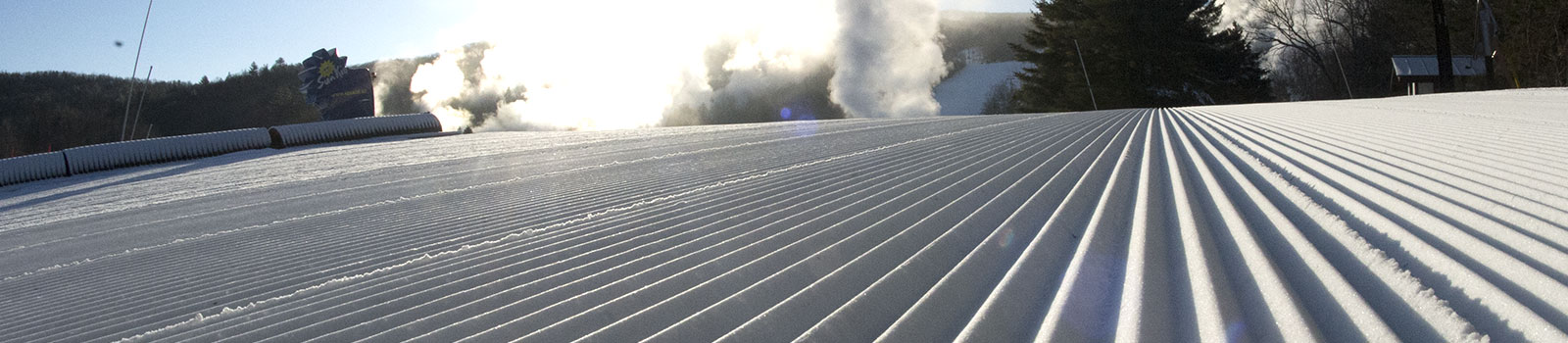
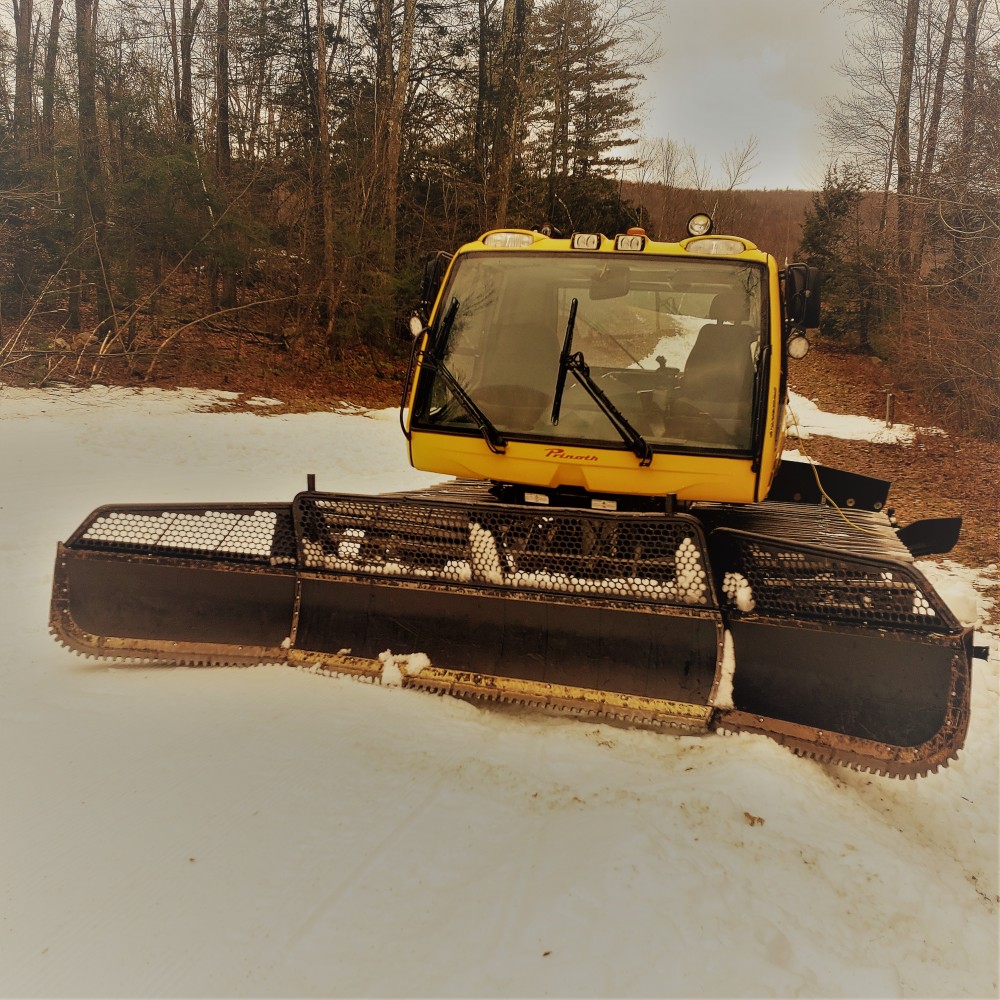
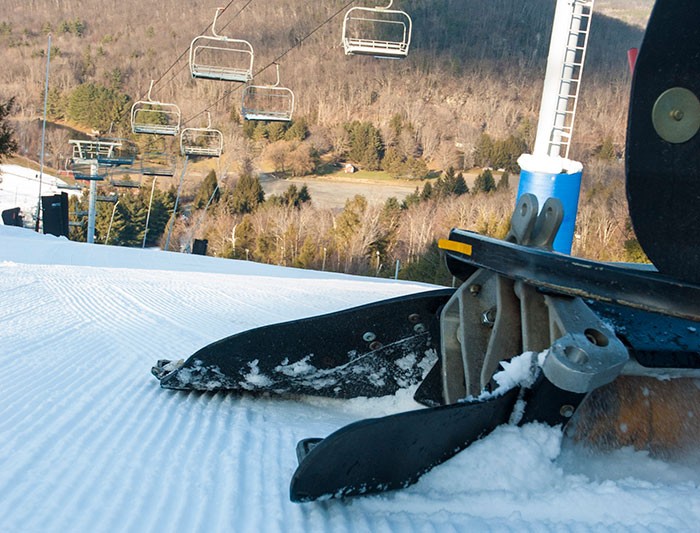
In addition we have purchased another Bombardier BR350+ snow grooming machine. Oh how I love the corduroy these big cats leave in their wake. 

After a through overhaul by our lift department the Poma Lift is ready and will once again spring to life to transport skiers to the race shack start on the Main Street Race Hill.

Guests will also find a new Buck-a-Run Race slope timing system ready for action.
So now you have access to the tools to settle the debate over who will be the next Lindsey Vonn or Bode Miller in your family or circle of friends. TIP: Sneak over and drop your skis at the Tune Center for a hot wax, quick edge sharpening or full-on race tune while you're family and friends are enjoying breakfast. Then see who buys those refreshingly cold beers in the afternoon. Don't they always taste better when someone else is picking up the tab!       

Past Snowmaking Enhancements

NOTE our dedication to improving snow conditions over the last few seasons... Kind of a major trend here...

Fall 2010 - MORE SNOW FASTER

Ski Butternut continues to expand our snowmaking by adding 30 more Top Gun - 18ft Pipe Dream model Tower Snowguns.. In addition we have repositioned the snowmaking line on Freewheeler, it was moved to the opposite side of the slope to play better with the prevailing wind.  Since this move conditions have been spectacular here.

Fall 2009 - MORE SNOWMAKING ENHANCEMENTS

Ski Butternut expands snowmaking again adding 120 more Top Gun - Pipe Dream model 18ft Tower Snowguns. These energy efficient snowmaking machines were added over the summer. Towers now run up the sides completely covering the Hob Nob and Lucifer's Leap trails. Additional guns have also been deployed across much of the base, along crosstown and throughout the beginner area. These are extremely energy efficient tower snowmaking machines that work extremely well in our winter environment. The mountain also added over a mile of new snowmaking pipe with numerous hydrants, one for each of the new snowguns. What does it mean - Simply - MORE SNOW - FASTER!

Fall 2008

Yes the mountain operations crew has been busy adding 30 more Top Gun - Pipe Dream model Tower Snowguns and upgrading both air and water lines across a number of trails on the mountain including: Lucifer's Leap where we replaced old 4" water lines with a higher capacity 8" water line. On Freewheeler we added 6" air lines & 8" water lines top to bottom. This replaced our dependence on older electric powered Headco fan guns to open this trail. The Race Course received new air & water lines. Scooter received new air and water lines. These additions combined with last years snowmaking enhancements have completely rewritten what you can expect from the Ski Butternut snowmaking team for this and future winters. Simply stated our team will deliver MORE SNOW FASTER this winter! In addition the mountain acquired another Bombardier BR 350 groomer. So get your rip sticks ready there will be loads of fresh, sweet corduroy awaiting your signature this winter.

Fall 2007

Over 225% MORE SNOW - Ski Butternut more than doubled its ability to pump water uphill in 2007 with the construction of a new multimillion dollar state-of-the-art pump house! The new pumps increase the amount of water we can pump uphill to 3600 gpm (gallons per minute) up from 1600 gpm. Simply stated the more water we can push up the hill, the more snow we can make. Now Ski Butternut, already noted for great conditions, can open twice as many trails in the same amount of time as in years past.

SNOWMAKING - The Lifeblood of the Ski Industry

Snowmaking and grooming are the lifeblood of the ski industry, but natural snow is its best marketing tool. Making snow is more than just waiting for cold weather - it's a SCIENCE! And after reading the following, you'll have a better understanding of the expertise and effort required from Ski Butternut's snowmakers and its snowmaking system to cover the slopes with snow. There are 7 key elements necessary for productive, energy efficient, quality snowmaking:

  1. Cold Temperatures - ideally 16 degrees Fahrenheit or lower. But give the team a few hour window with anything below 28 degrees and we can start making snow. It's just not as efficient at 28 as it is at 16.
  2. Low Humidity * Electricity - Lots of electricity - the power company loves us,
  3. Compressed Air - again more electricity needed * see below Water & Pumps - which are needed to push the water up the mountain - again more electricity needed - see an expensive equation developing here!
  4. Snow Guns - the equipment that combines the ingredients; water and compressed air, to form snow crystals
  5. A Knowledgeable & Talented Snowmaking Staff - Our guys are dedicated and have years of experience.
  6. Lots of Water - we have a few lakes that hold millions of gallons of water for snowmaking
  7. Access to lots of electricity & the money to pay for it. All this equipment eats up lots of electricity to operate. Lots of money is needed to pay for the Electric Bill unfortunately that is why the cost of lift tickets across the east is a concern. Ski Butternut tries to keeps its costs down by being energy efficient and looking for optimal windows of time to make snow.

Mother Nature & Old Man Winter

As usual it's a He/She thing. Well one of them, Old Man Winter or Mother Nature, chooses when to provide the cold temperatures and hopefully low humidity. Unfortunately, Ski Butternut has no control over the weather. However, we do provide the compressed air, water, electricity, and select the best snowgun mix by trail and assemble a crack team to create optimal ski conditions across the mountain. Seven Large Diesel powered air compressors deliver 14,400/cfm (cubic feet per minute) of air at 100 to 150/psi (pounds per square inch), through miles of snowmaking air lines that run up every one of our slopes and trails. Another set of pipes is used to pump 5,200 gpm (gallons per minute) of water up the mountain. Ski Butternut, as noted previously, drastically increased its ability to pump water uphill in the fall of 2007, again in 2011 (more than doubling its previous pumping capacity) and we added 2 new pumps and another 1600GPM in the summer of 2012. The water is drawn from one of two special holding ponds located on Ski Butternut property. The pumps that push the water and the compressors that compress and move the high-pressure air use a lot of electricity. Snowmaking, therefore, is a very - very - very expensive enterprise.

The miles of snowmaking pipe used to transport the water and compressed air around the mountain have a set of valves spaced at 50 foot intervals lining the slopes. Snowguns are connected to these valves by high-pressure hoses. One high-pressure hose is connected to a water valve, and the other hose is connected to a compressed air valve. Both hoses are then connected to a single snowgun. At Ski Butternut we may have as many as 50 snowguns operating on a single trail. And we can make snow on 8 or 9 trails at a time under ideal conditions.

In the typical snowgun, the water and compressed air are mixed in such a way that the blast of expanding air atomizes the water, splitting it into very tiny droplets, at the same time the compressed air and pressure of the water helps to blow the water droplets across the slopes and high above the slopes so it has more time to freeze as it drops to the ground. As the water droplets descend toward the slope they freeze into snow. Super-cooling, a process that happens because the water droplets are pushed out of the snowgun under hi-pressure, into a relatively low-pressure environment. The water droplets quickly expand which allows them to cool faster. In the process of expanding they give off more heat further helping them to freeze quickly. That's why this process is called super-cooling.

Cold Temperatures

We all know that 32 degrees is the temperature at which water begins to crystallize, but in most cases, it's not cold enough for efficient and productive snowmaking. It's a scientific fact that the water droplets may reach temperatures well below freezing before turning into snow. This is knows as super-cooling, and is the reason why the expanding and cooling air in the snow gun is a significant factor, and why snow makers prefer very cold weather. Generally, temperatures must drop below 26-28 degrees Fahrenheit before snowmaking can even begin. At Ski Butternut, we will make snow at temperatures at or below 28 degrees "wet bulb" but we prefer 22 to 24 or lower, with 16 degrees or less being ideal. Wet Bulb is a temperature measurement that takes into account both the ambient air temperature and the relative humidity, another key snowmaking factor.

Humidity

Humidity also plays a big role in determining when snowmaking can begin. At higher humidity levels, the process is hampered, because the air is already saturated with water molecules. The drier the air, the better the snowmaking conditions and the higher the quality of snow that can be produced. Low humidity, combined with cold air (16 to 22 degrees Fahrenheit), allow our snowguns to shoot out beautiful, white, powdery snow crystals! The degree of humidity is so critical, in fact, that when the temperature approaches 28-30 degrees, it is the humidity level, not the temperature, that dictates whether or not the ski area can cost-effectively continue to make snow! Water Snowmaking uses a lot of water. At Ski Butternut, water is treated as a precious resource. It is the basic raw material needed for skiing and winter sports recreation. The snowmaking process converts water into snow, which our snowcats and other grooming machinery spread around the mountain. During a thaw or lord forbid winter rain, some snow may melt. This water runs back down the mountain into Ski Butternut's two holding ponds, where it is held until reused to make snow. Ski Butternut's snowmaking system was upgraded in the fall of 2007 and can now pump 3600 gallons of water per minute. In the course of a regular winter, we will convert tens of millions of gallons of water into snow. It takes 220,000 gallons of water to cover one acre with a foot of snow!

Snow Guns

The five primary types of snow guns we use are highlighted below. Each has a specific set of advantages, which determines when and why they are used. These characteristics are carefully weighed against environmental and operational factors, such as temperature, humidity, wind speed/direction, times of operation and grooming tactics. Often, Ski Butternut uses a combination of snow guns from our battery to provide the best snow possible for our guests.

HKD 30' Tower Snow Guns

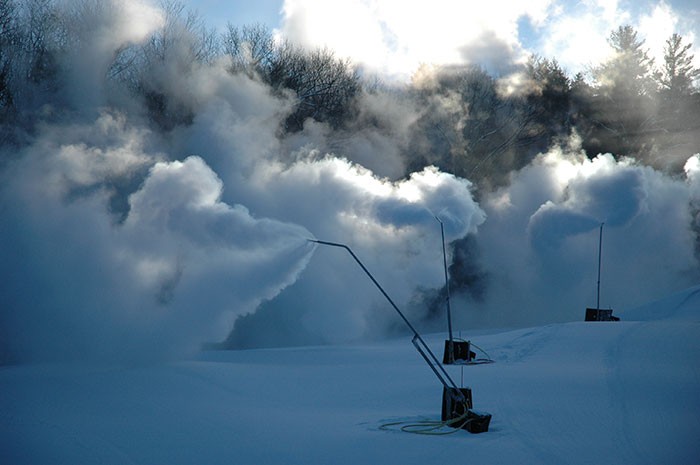
Over the last few seasons, we've added over 150 of the newest snowgun model available, the HKD 30' tower snowguns. These HKD guns are mounted on poles which reach up to 30 feet into the air. These are designed to make quality snow more efficiently and less expensively as a result of using less of the extremely expensive highly compressed air. However, these new snowguns are somewhat expensive to purchase. Nevertheless, because these guns use less compressed air, three-and-a-half guns can be run using the same amount of compressed air that some older models of snowguns used. When temperatures allow, and we're pushing the maximum amount of air possible, we employ the HKD Tower snowguns to make more snow. As they allow us to pump more water because more snowguns can be operating given a fixed amount of air. Remember our system tops out at 14,400 CFM. More snow is the result of pushing more water out the nozzles of the snowguns. Ultimately, given a fixed amount of compressed air available the more water we can pump and the more snowguns we can have working, the more snow we can produce in a given period of time. The position of the guns is another factor that makes the HKD design more efficient. The new guns' 30 foot height gives the snow crystals they produce, shooting from the top of the snowguns six nozzles, more time to freeze as they slowly fall to the ground. The biggest advantage of the HKD design is that these guns use less air = less electricity (they're simply more efficient to operate) and when necessary they allow us to make snow at temperatures a few degrees warmer (28 degrees) than older snowgun technology permitted (22-24 degrees). This gives us a longer period of time when snow can be made. Also, more ground is covered by one gun because the crystals are spread out by wind or drift as they fall to the ground. So less grooming time is needed to spread out the piles of snow the guns make. Again a savings is realized in less diesel fuel being used in the groomers and less wear and tear on the snow grooming machines. This also means that the HKD is more environmentally friendly. Go Green!

TOP Gun Pipe Dream 15-18' Tower Snow Guns

This past seasons, we added 30 of the TOP Gun Towers. These snowguns are also mounted on poles which reach 18 feet into the air. These are designed to make quality snow more efficiently and less expensively as a result of using less of the extremely expensive compressed air. The Top Gun Towers are slightly less expensive than the HKD's and are not as tall. Advantage is on windy days less production is lost due to wind drift. These guns use less compressed air, three-and-a-half guns can be run using the same amount of compressed air that some older models of snowguns used. When temperatures allow, and we're already pushing the maximum amount of air possible, we employ the TOP Gun Tower snowguns to make more snow. As they too allow us to pump more water because more snowguns can be operating given a fixed amount of air. Remember our system tops out at 14,400 CFM. More snow is the result of pushing more water out the nozzles of the snowguns. Ultimately, given a fixed amount of compressed air available, the more water we pump therefore the more snowguns we can have working. End result we can produce more snow in a given period of time. The position of the guns is another factor that makes the TOP Gun Tower design more efficient. This 15 foot height gives the snow crystals they produce, shooting from the top of the snowguns four, star shaped nozzles, time to freeze as they slowly fall to the ground. The biggest advantage of the TOP Gun Tower snowguns design is that these guns use less air = less electricity (they're simply more efficient to operate) and when necessary they allow us to make snow at temperatures a few degrees warmer (say 28 degrees) than our older snowgun technology which required colder temps in (22-24 degrees) range before you would fire up the system. This gives us a longer period of time when snow can be made. Also, more ground is covered by one gun because the crystals are spread out by wind or drift as they fall to the ground. So less grooming time is needed to spread out the piles of snow the guns make. Again a savings is realized in less diesel fuel being used in the groomers and less wear and tear on the snow grooming equipment. This also means that the Top Gun just like the HKD is more environmentally friendly. Go Green!

SMI & HEDCO Fan Guns

These guns create their own air blast using an electric driven fan instead of having to hook into our expensive compressed air lines. Multiple nozzle spray a fine mist of water into the air blast created by the fan, which blows the minute droplets 40 to 90 feet out over the slopes. The water droplets freeze in the cold air as they float down to the slopes. Fan snowguns work best in temperatures below 22 degrees and, because they don't need to use the expensive and often limiting factor of compressed air. They provide another component in Ski Butternut's snowmaking artillery mix. If the snowmaking team is running all the compressed air to the max 14,400 CFM and there is still more water available to be pumped we can add these fan operated snowmaking machines into the mix to maximize our snowmaking ability and use all our available water. So at times when all of our compressed air is being used by our other snowguns, and there's still available water, Ski Butternut can boost snowmaking capacity further, simply by firing up its fan snowgun arsenal.

OMICRONS - AKA Whisper guns

These are portable, compressed air / water snowguns with the mixing chamber 3 feet above the ground and mounted on runners so that they may be moved about the mountain with snowmobiles. They function best at temperatures hovering closer to freezing (24-28 degrees), because they require more air pressure to operate the gun to create water molecules that freeze into snow very quickly. They are best used when it is quite windy because they are lower to the ground which means less loss due to wind drift. That occurs when the wind blows the freshly made snow off the trails and into the woods. They are nicknamed the whisper guns because they are somewhat quieter than a lot of the other snowguns of their time.

RATNICKS

Ratniks are very similar to Omicrons in design, using both air and water lines. Their advantage is that they use a much higher volume of both air and water. These snowguns produce a larger volume of snow quickly. But they use up a large amount of available air and water which limits the number of snowguns an area can use at any one point in time. These guns work best in very cold temperatures (below 20 degrees) and are often operated in high use areas to quickly cover sections of slopes that endure lots of traffic or areas of high wear, or sections of trails that just need more snow - quickly.

ELECTRICITY

To cover our slopes with copious amounts of man-made snow, large quantities of compressed air and water must be pushed through miles of snowmaking pipes to all sections of our mountain. We have an in line system that totals 13 large compressors that push air up the mountain at a rate of 14,400 CFM [cubic feet per minute] at 100 to 150 psi. Also used are several high-capacity water pumps and a number of free standing Fan Guns that all require large amounts of electricity. Is it any wonder why snowmaking is such an expensive proposition for eastern ski areas? Electricity cost alone may eat up as much as 20 to 22% of a resorts total net revenue. This is just the cost for electricity and does not include any costs for labor, equipment, fuel, insurance, overhead, reinvestment, leasing, taxes and the numerous other costs that need to come out of each individuals lift ticket.

OUR SNOWMAKING CREW - Works 24/7 = 24 Hours A Day - 7 Days a week when needed!

Throughout the winter months, our snowmakers are on constant watch, waiting for cold temperatures. When the weather looks right, they gear up and head out onto the mountain to make snow. Snowmaking is often a 24-hour a day, seven-day-a-week enterprise for as long as the cold temperatures last. Many times they miss Thanksgiving, Christmas and New Years as their expertise is needed out on the hill to make snow. It's a cold, wet job, but our snowmakers love manipulating these dangerous high pressure hoses and playing with frozen snowgun nozzles, all to assure our important guests the finest packed powder conditions available, anywhere in the northeast!

Like working in the dark when it's cold? Why not add in the threat of being soaked to the bone.
(If you are interested in joining our snowmaking team, contact Tony Bleau, Ski Butternut's Mountain Manager, for an interview. Tony directs all our on-mountain snowmaking and grooming operations).

Want to know what it feels like to make snow?
Visualize yourself in a car wash when it's pitch dark and the thermometer is pushing lets say 8 degrees Fahrenheit, your dressed in soaking wet clothes which are really designed to keep you dry, enduring a gale force wind blowing lets say 30+ miles an hour. So the wind chill is now at about 26 below zero.
(You just can't stay dry when playing with high-pressure water hoses - just ask any fireman!)
When you're making snow on the mountain, you're often soaked to the skin and freezing to the bone, battling frigid temperatures and a wind chill factor hovering at or well below zero. You stay despite all this because it's hard work! You enjoy 12 hour shifts of hard, rugged, mentally and physically demanding work, one of the key reasons these grizzled guys stay warm. That's the life of a Ski Butternut snowmaker. The ability to endure is what makes them stand apart from less hardy souls.
Our Snowmaking experts love just this type of challenge. Interestingly, many are right there in line looking to take the first chair up to test the product when the slopes open in the morning! Talk about dedication and commitment to a cause - these guys are our lifeline to a long winter of fun!

Steals and Deals
$25 Lift Tix
Ski with a Pro
Ski & Stay from $45 / Day
Upgrade to Season Pass
Tubing $18